

SLIMM and VSLLIM Walk Away Safe Reactors
The walk-away safe Scalable LIquid Metal-cooled small Modular (SLIMM) reactor and the Very-Small, Long-LIfe, Modular (VSLLIM) microreactor designs have been developed at the University of New Mexico’s Institute for Space and Nuclear Power Studies, with redundant and passive operation and safety features and long operation lives without refueling. The SLIMM reactor is capable of generating 10-100 MW of thermal energy continuously for ~68 – 6.3 full power years (FPY) without refueling. The VSLLIM microreactor is capable of generating 1 -10 MW of thermal power for ~92 -5.9 FPY. These proliferation proof reactors, after being constructed, assembled and sealed in the factory, could be transported to the plant site by a truck, barge or rail (Fig. 1). At the site, they will be installed below ground, to protect against missile attack or an airplane crash, and mounted on seismic isolation bearings to protect against earthquakes (Fig. 2). With no onsite storage of either fresh or used fuel, the post operation units of SLIMM and VSLLIM reactors would be stored for only a few months on site, before being transported back to the factory and replaced with fresh units.
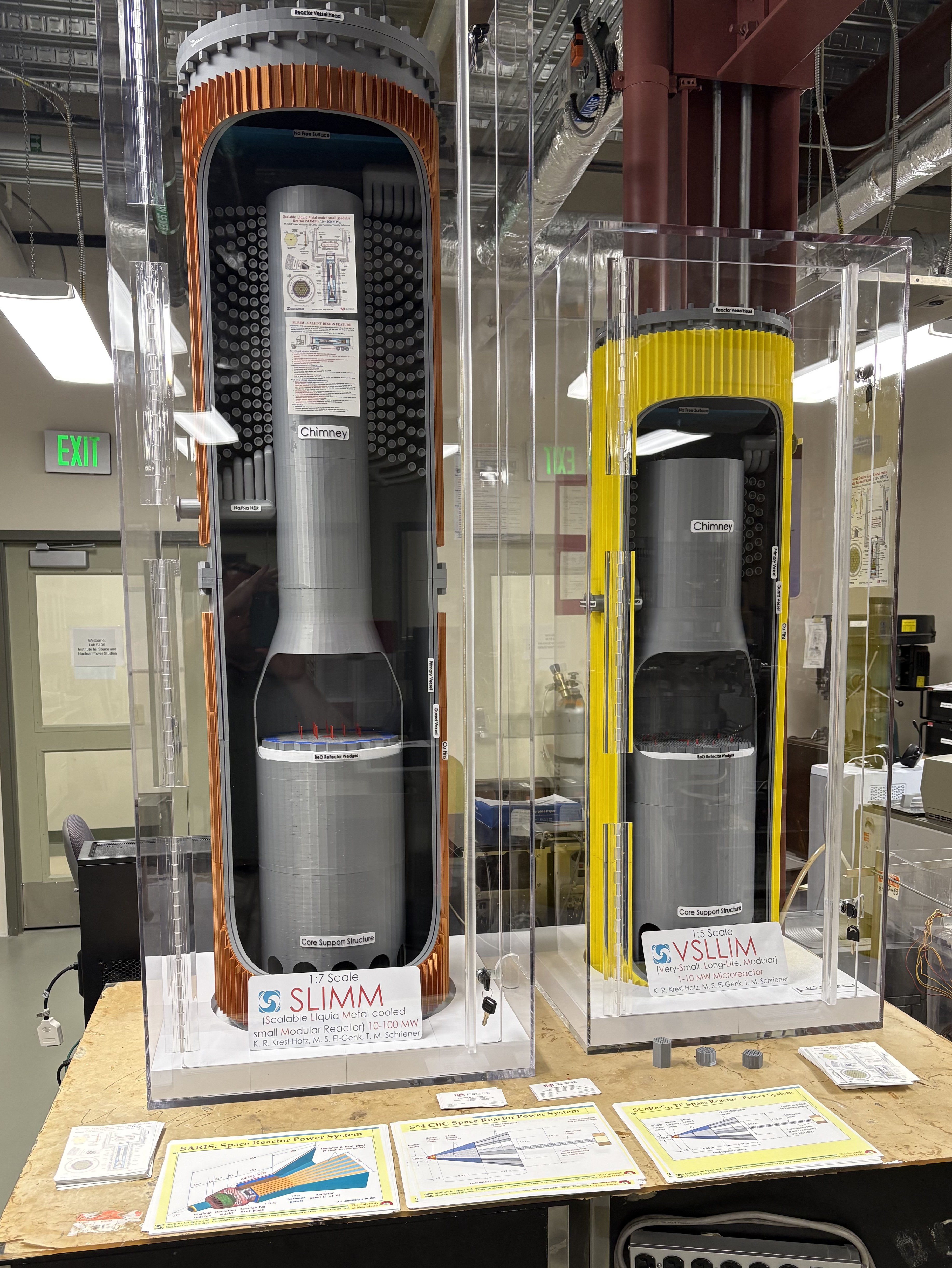
3-D Printed 1:7 scale model of SLIMM reactor and 1:5 scale model of VSLLIM microreactor
The walkaway safe VSLLIM microreactor design developed at the ISNPS has been licensed by UNM Rainforest Innovation to the Eagle Nuclear Energy ( https://eaglenuclear.com/ ) for commercial development and deployment. The stock of this startup company, with mass uranium ore deposits in the states of Nevada and Oregon in USA, is presently trading on the Nasdaq exchange under the symbol "NUCL".
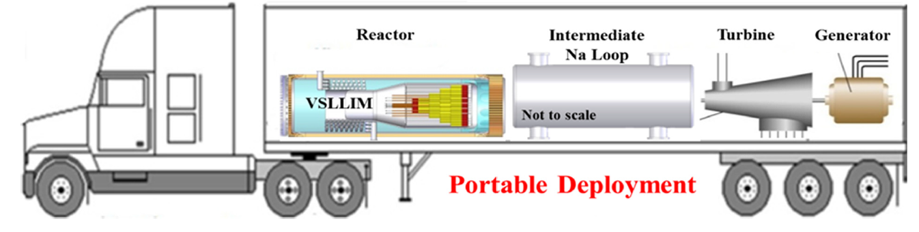
Fig. 1: VSLLIM microreactor plant mounted on an 18-wheelers truck.
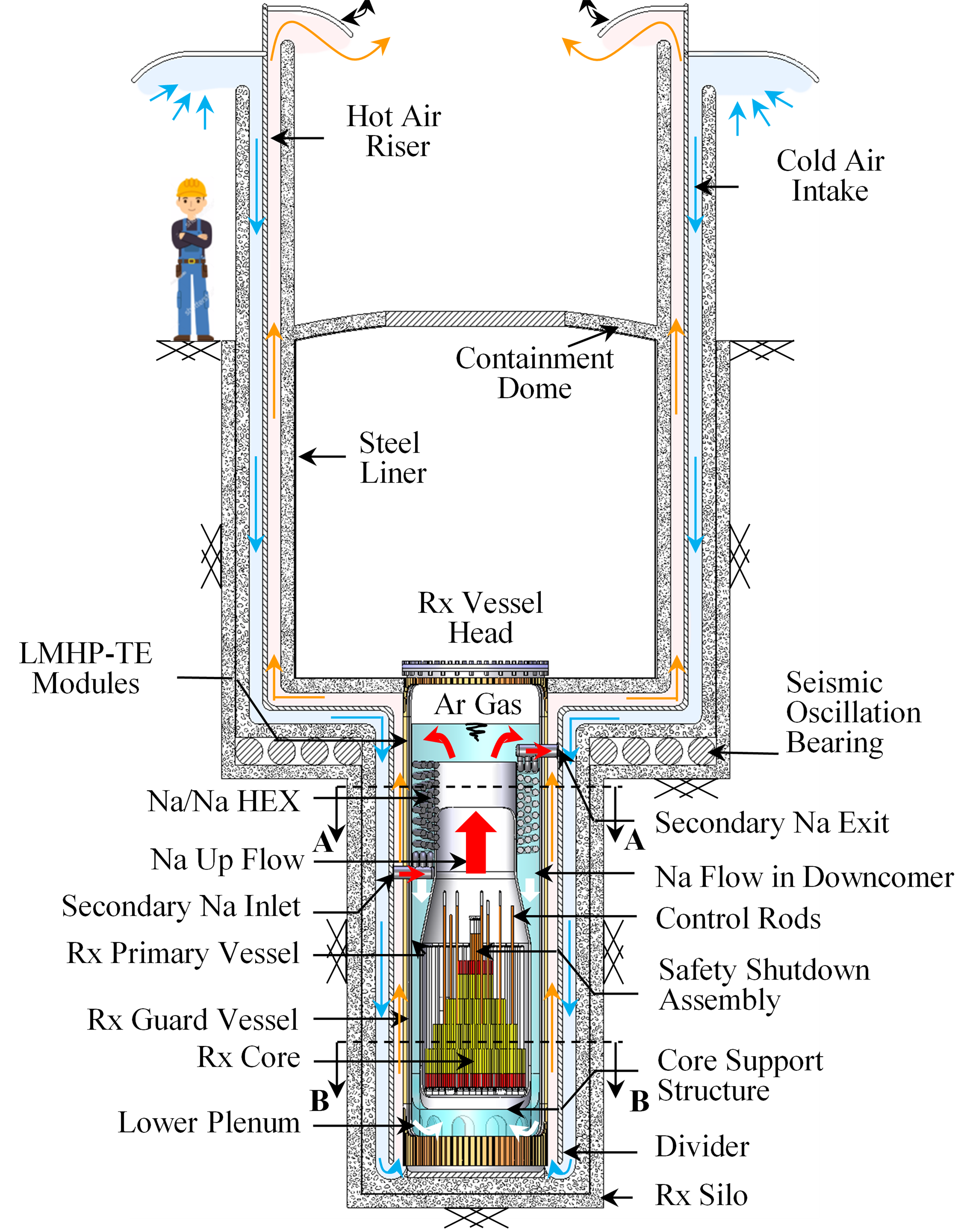
Fig. 2: Longitudinal cross-section of the VSLLIM microreactor installed below ground and mounted on seismic isolation bearings.
1. Very-Small, Long-LIfe, Modular (VSLLIM) Microreactor
The walk-away safe VSLLIM microreactor design developed at UNM-ISNPS offers many passive operation and safety features and is cooled by natural circulation of in-vessel liquid sodium during nominal operation and for decay heat removal with the aid of in-vessel helically coiled tubes Na/Na heat exchanger and 2 m tall chimney. The reactor can continuously generate 10 - 1.0 MW of thermal power for ~5.9 - 92 Full Power Years (FPY), respectively, without refueling. The reactor can provide both electricity and process heat for space heating and industrial uses and is compatible with different energy conversion options for electricity generation, such as superheated steam Rankine cycle, supercritical CO2 Brayton cycle, and open-air Brayton cycle in arid regions.

Fig. 3: Longitudinal and radial cross section views of the VSLLIM microreactor for generating 1-10 MWth showing sodium flow path and locations of reactor control rod groups.
Natural circulation of the in-vessel liquid sodium cools the nuclear reactor core during nominal operation and after shutdown (Figs. 3-4), aided by a 2 m tall chimney, and in-vessel helically coiled tubes Na/Na heat exchanger (HEX) located at the top of the downcomer. Owing to the low vapor pressure of sodium, the VSLLIM microreactor operates slightly below atmospheric pressure eliminating the need for a pressure vessel. Instead, the reactor has a primary vessel and a guard vessel, separated with a small gap filled with argon gas that houses sodium leak detectors. The argon gas decreases losses of thermal power for the reactor during operation to the environment. In the event of a loss of heat removal due to a failure or malfunction of the in-vessel Na/Na HEX, the argon gas is discharged and the gap between the primary and guard vessels is flooded with liquid sodium to facilitate the decay heat removal by in-vessel natural circulation. The removed decay is removed from the outer surface of reactor guard vessel using natural circulation of ambient air.

Fig. 4: Cross section and elevation views of the VSLLIM UN fuel assembly containing the B4C reactor control rods and the center ESD assembly.
In addition, decay heat generated in the reactor core will be partially stored in the large mass of the in- vessel liquid sodium with several hundred degrees of temperature margin from the boiling point. Furthermore, the alkali liquid metal heat pipes embedded in the primary vessel wall passively and redundantly transport a fraction of the reactor thermal energy during nominal operation and the decay heat after shutdown to a multitude of thermoelectric modules for generating auxiliary power. These modules, cooled by natural circulation of ambient air, can generate 10s of kW of auxiliary DC electric power, 24/7, for operating vital instruments and functions of the plant, independent of the onsite and off-site electrical power sources, and in the event of a toral station blackout.
The soft, fast neutron energy spectrum VSLLIM reactor core is loaded with 13.76 wt.% enriched UN fuel rods with HT-9 steel cladding arranged in a with P/D = 1.2 in hexagonal bundles with scalloped BeO walls (Fig. 4a). The walls help achieve an almost laterally uniform flow across the bundles. The 54 full hexagonal bundles and the 6 partial bundles of UN fuel rods in the reactor core are arranged in 4 concentric rings. Each full bundle is loaded with 19 UN fuel rods and the partial bundles each are loaded with 12 rods (Fig. 4b). The reactor core fuel bundles are radially surrounded by BeO wedges within the HT-9 steel core barrel which serves as a radial neutron reflector (Fig. 4b).
The VSLLIM microreactor has two independent means for reactor control. The first is the 12 B4C Reactor Control (RC) rods located in selected fuel bundles or assemblies within the second and third rings of the core (Fig. 3b, 4a and c). The HT-9 clad control rods replace the centermost UN fuel rod in these assemblies. For redundancy, the VSLLIM reactor core is provided with a central Emergency Shut Down (ESD) assembly of 19, HT-9 clad B4C rods, 80% enriched in 10B, with an HT-9 steel scalloped wall (Fig. 3, 4b and d). This assembly provides an independent means for shutting down the VSLLIM reactor in case of emergency. The ESD assembly is fully withdrawn from the reactor core prior to startup and is fully reinserted following nominal reactor shutdown.
Animation of Components of VSLLIM Microreactor
Publications on the VSLLIM Microreactor
- El-Genk, M. S., and L. M. Palomino, "A Walk-Away Safe, Very Small, Long-LIfe, Modular (VSLLIM) Reactor for portable and Stationary Power". Annals of Nuclear Energy, 129, 181-198, 2019.
- Palomino, L. M. and M.S. El-Genk, "CFD Analyses of Liquid Sodium Heat Transfer in 19-rod Hexagonal Bundles with Scalloped Walls". International J. Heat and Mass Transfer, 144, 118637, 2019.
- Palomino, L. M., M. S. El-Genk, and T. M. Schriener, "Post-Operation Dose Rate Estimates for Very-Small, Long-LIfe, Modular (VSLLIM) Reactor". ASME Journal of Nuclear Engineering and Radiation Science, 115, 2019.
- Palomino, L. M. and M.S. El-Genk, "VSLLIM - Passive Decay Heat Removal by Natural Circulation of Ambient Air". J. Thermal Science and Engineering Progress, 11, 50-65, 2019.
- El Genk, M.S., T.M. Schriener, L. Palomino, "Passive and Walk-Away Safe Small and Micro Reactors for Electricity Generation and Production of Process Heat for Industrial Uses". J. Nuclear Engineering and Radiation Science, 7, 031302 1-12, 2021.
- El-Genk, M.S., T.M. Schriener, A.N. Shaheen, "Machine-Learning Algorithms for Remote-Control and Autonomous Operation of the Very-Small, Long-Life, Modular (VSLLIM) Microreactor". J. Nuclear Engineering, 6(4), 54, 2025.
2. Scalable LIquid Metal-cooled small Modular (SLIMM) Reactor
The SLIMM reactor developed at the University of New Mexico’s Institute for Space and Nuclear Power Studies for generating 10-100 MWth is a fast spectrum reactor that is walkaway safe and scalable and could provide both electricity and process heat (Fig. 5). This reactor uses off-the-shelf materials with well-known properties and the reactor core exit temperatures (650-820 K, depending on the nominal thermal power) enable plant thermal efficiency of 35-40% for electricity generation to the grid. It is passively cooled by natural circulation of in-vessel liquid sodium (Na) during nominal operation and after shutdown, with the aid of the in-vessel chimney and the Na-Na HEX. The chimney height (2-8 m) and the height and design of the HEX depend on the nominal thermal power (Figs. 6). With the same reactor core design, the nominal thermal power of the SLIMM reactor increases simply by increasing the height of the in-vessel chimney above the core, and the height and design of the concentric helically coiled tubes Na-Na heat exchanger (HEX) placed at the downcomer (Figs. 7). 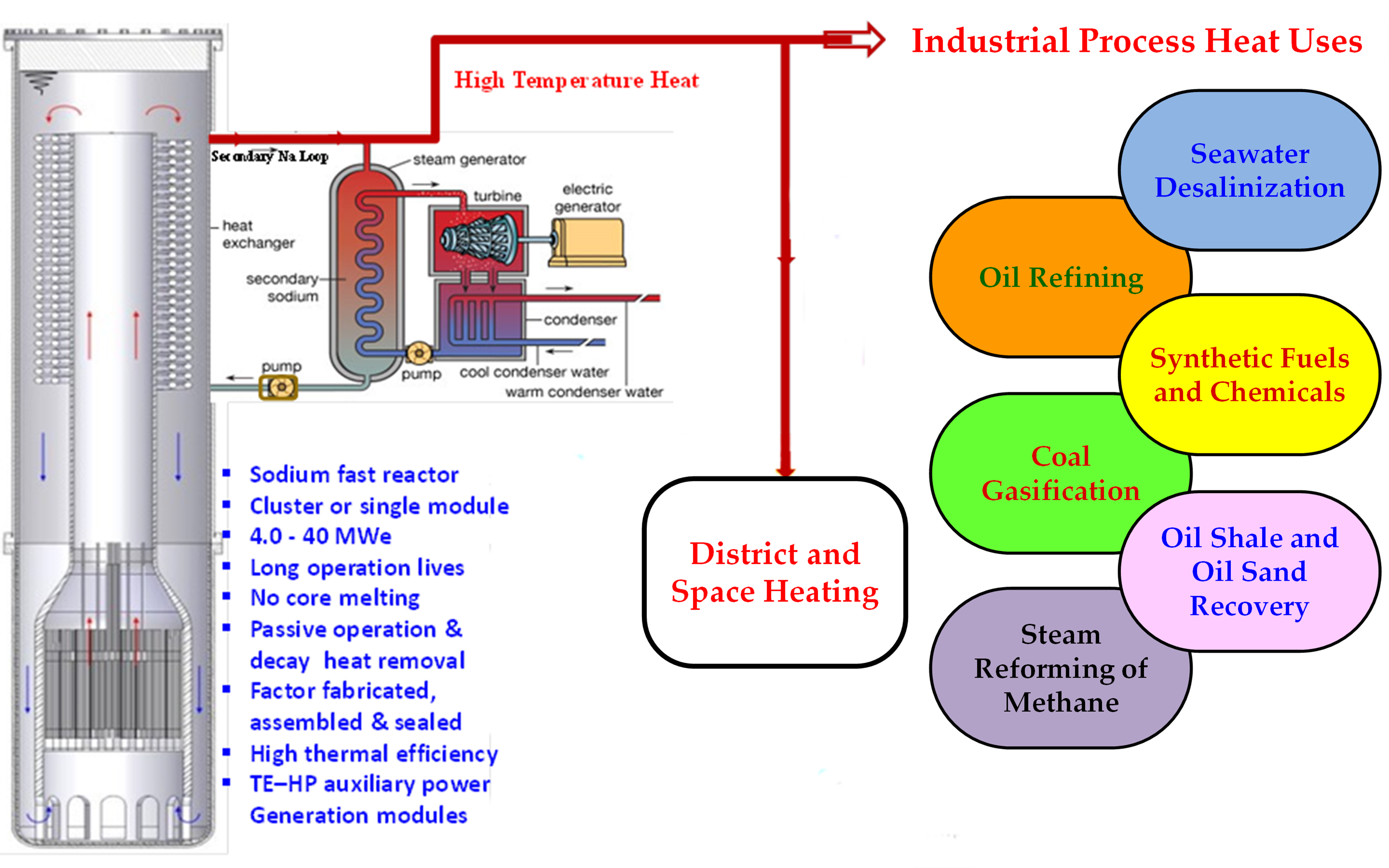
Fig. 5. SLIMM reactor for electricity generation and production of process heat for industrial uses
At nominal powers of 10 and 100 MWth, the SLIMM reactor could operate continuously without fueling for ~66 and 6.3 full-power years, respectively. The reactor will be fabricated, assembled, fueled and sealed at the factory, then transported to the construction site by land (rail or heavy truck) or water ways on a barge. At the site, the SLIMM reactor would be installed below ground, to avoid impacts by an airplane or missiles, and mounted on seismic isolation bearings to protect against earthquakes (Fig. 2).
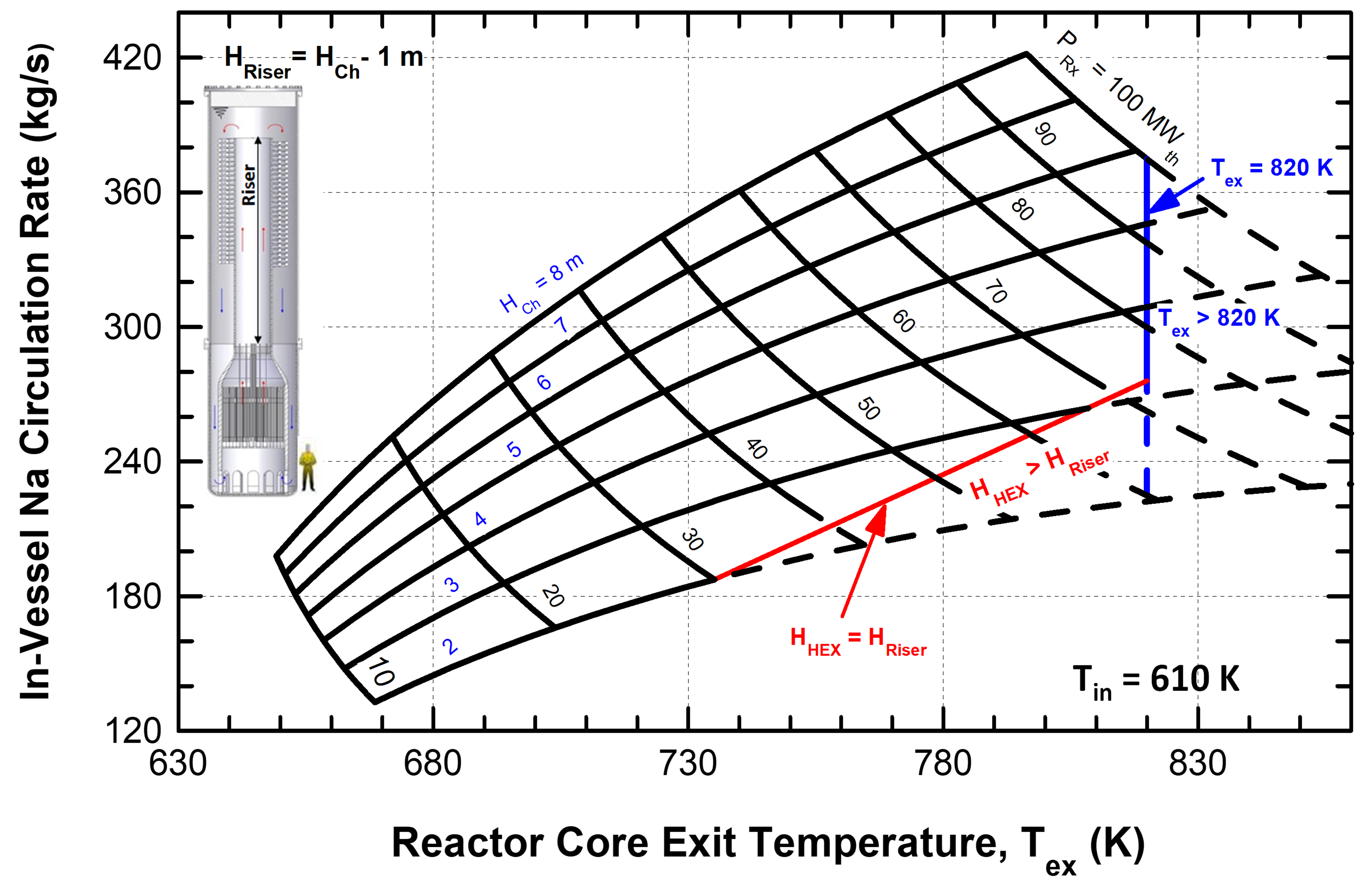
Fig. 6. Steady-state operation surface of SLIMM reactor cooled by natural circulation of In-vessel liquid sodium.
The modular SLIMM reactor concept possesses numerous design and safety features to support walkaway safe operation and enable lower operating costs by reducing the required number of onsite support personnel. The reactor design has redundant reactivity control and emergency shutdown mechanisms and has a large temperature reactivity feedback. The SLIMM reactor includes redundant means for the passive removal of the decay heat from the core after shutdown, without active intervention. These include the in-vessel Na-Na HEX, natural circulation of ambient air at the outer surface of the reactor guard vessel wall with heat pipes spreaders, and variable conductance liquid metal heat pipes (LMHPs) embedded within the reactor primary vessel wall. The SLIMM reactor has few reactor vessel penetrations and operates slightly below atmospheric pressure, thanks to the low vapor pressure (or high boiling point) of liquid sodium. The large mass of the in-vessel sodium also provides effective thermal energy storage after reactor shutdown, maintaining a safety margin of several hundred degrees kelvin from the boiling temperature.
A unique design feature is thermally coupling the variable conductance potassium LMHPs embedded in the upper section of the reactor primary vessel wall to thermoelectric (TE) energy conversion modules. They passively generate auxiliary power of 10's of kWe during nominal reactor operation and after shutdown for maintaining vital plant functions, independent of on-site and off-site power sources. The LMHP-TE modules are highly redundant with no-single point failures and the TE electric elements could be cooled either by forced convection of water or natural circulation of ambient air for space heating in colder regions. The electrical power for circulating the cooling water of the TE modules is a small fraction of that generated by these modules.
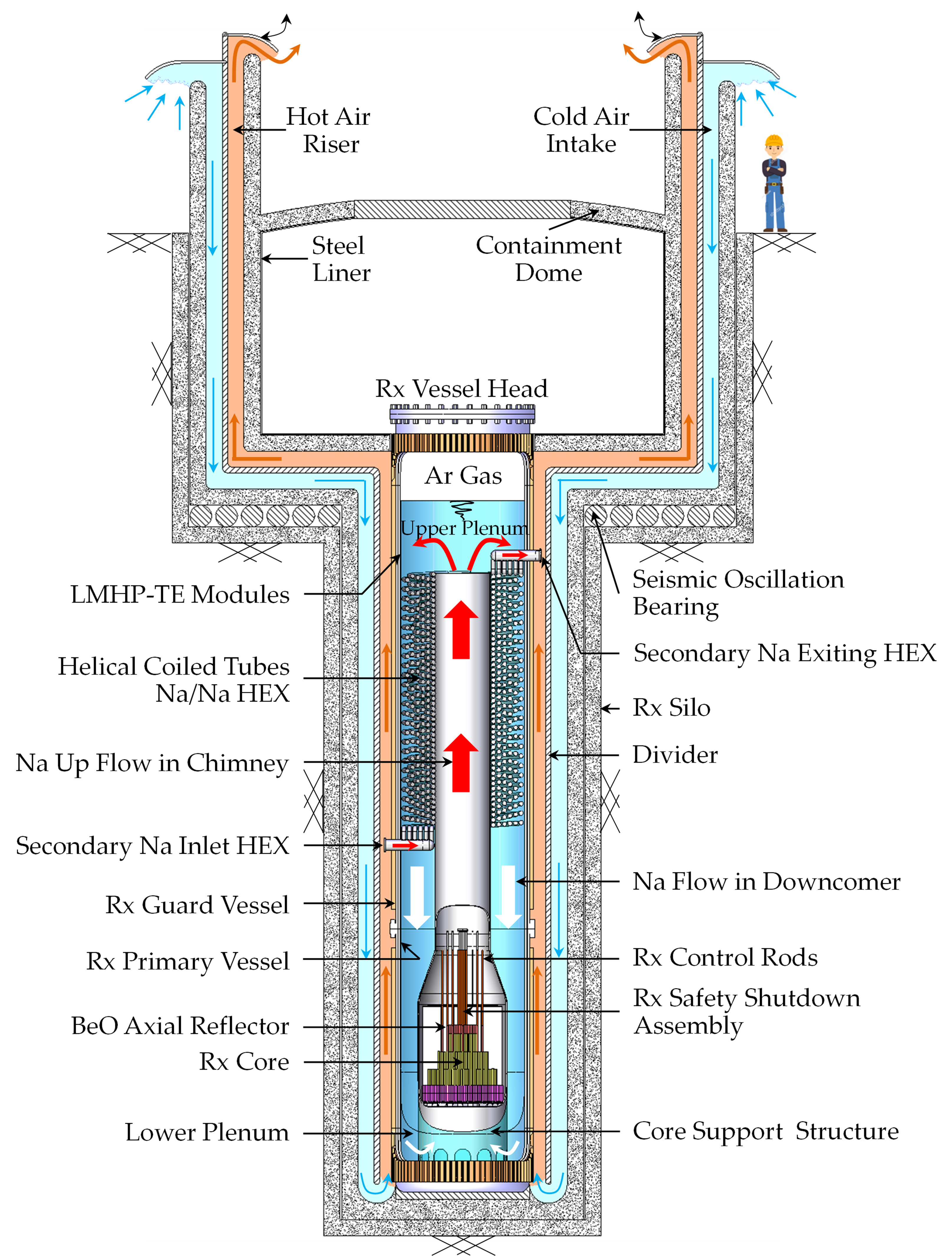
Fig. 7. A cross-sectional view of the 100 MWth SLIMM reactor installed at the site below grade and mounted on seismic oscillation bearings.
The SLIMM reactor is suitable for meeting the energy needs of small and remote communities and countries with limited or no access to an electrical grid or fossil fuel supplies year round. The passive cooling by natural circulation of in-vessel liquid sodium, the passive and redundant generation of auxiliary electrical power using LMHP-TE modules during nominal operation and after reactor shutdown, the redundant control and emergency shutdown, and the multiple means of passive removal of decay heat after shutdown makes the SLIMM a walk-away safe reactor (Figs. 7, 8). The SLIMM reactor module has two concentric HT-9 (12Cr-1Mo-WV) martensitic steel vessels, an inner primary reactor and an outer guard vessel, separated by a ~1 cm gap filled by Ar gas during nominal operation to reduce heat losses. For modularity and scalability, the SLIMM reactor vessels consist of two parts. The lower part contains the core, the support structure and reactor control. The top part houses the chimney and the annular, helically coiled tubes Na-Na HEX, placed at the top of the downcomer, for maintaining natural circulation of in-vessel liquid sodium commensurate with the nominal thermal power (Figs. 5, 6). This power varies from 10 to 100 MWth, by simply increasing the chimney height and the design of the Na-Na HEX, while using the same core design. Thus, the nominal operation life of the SLIMM reactor increase from 6.3 to 66 FPY, as the nominal thermal power decreases from 100 to 10 MWth, respectively.
The argon (Ar) cover gas that fills the space above the free surface of the liquid Na in the upper plenum functions as a safety barrier against release of radioactivity and accommodates the thermal expansion of the large mass of in-vessel liquid sodium with temperature, regulating the system pressure and maintaining large temperature margin from the boiling point. During nominal operation and after shutdown the hot sodium exiting the core flows through the chimney, whose height depends on the nominal reactor power (Fig. 7), to the upper plenum then reverses direction to flow down through the downcomer past the Na-Na HEX that cools it down by the secondary Na flowing through the HEX helical tubes. The cooled sodium exiting the downcomer flows through the core lower support structure in the lower plenum before entering the reactor core, nominally at 610 K (Fig. 7).
The Na-Na HEX, located at the top of the annular downcomer to maximize the driving pressure head for natural circulation (Haskins and El-Genk 2017), is comprised of concentric helically coiled tubes for compactness, while enhancing the heat transfer surface area for cooling the in-vessel liquid Na flowing through the HEX. The secondary sodium, (Fig. 7) flowing inside the HEX helically coiled tubes, removes and transports the heat to be used for industrial application and/or produce superheated steam for a Rankine cycle to generate electricity at a thermal efficiency 35-40%, or even higher (Fig. 5). The combination of electricity generation and process heat enables greater overall utilization of the reactor thermal power to as much as 80%, or even higher, hence decreasing the unit energy cost to the end users.
The SLIMM reactor core is loaded with 36 hexagonal shrouded assemblies each with 37 rods of 15.35% enriched UN, with a sodium bond and HT-9 stainless steel cladding (Fig. 5). The high thermal conductivity of UN decreases the fuel operation temperatures, and its high heavy-metal atom density helps developing a compact reactor core and achieving long full power operation lives. In addition, the UN fuel has good fission gas retention and would experience little swelling at the relatively low nominal operation temperatures (< 1400 K) in the SLIMM reactor core. The BeO shroud walls of the fuel assemblies are clad in thin HT-9 stainless steel and scalloped on the inside to ensure the same flow area for all rods in the assemblies. The BeO shrouds increase the BOL excess reactivity and decrease the fuel enrichment due to the increased neutron production by the (n,2n) and (γ,n) reactions in Be, which also slightly moderate the neutron energy spectrum.
The SLIMM reactor core has three concentric rings of UN fuel assemblies (Rings 1-3) surrounded by a radial blanket of depleted uranium nitride (DUN) assemblies in Ring 4 (Fig. 5). The core has a central assembly of 37 enriched B4C rods for reactor safety shutdown (RSS) and a set of 12 enriched B4C rods for reactor control (RC), one each at the center of the twelve UN fuel assembles in Ring 2. Either the RSS assembly or the RC rods independently shut down the reactor.

Fig. 8. Radial Cross-section View of SLIMM reactor.
Following reactor shutdown, the decay heat generated in the core is removal by natural circulation of in-vessel liquid sodium, maintained using multiple redundant passive means. These include the in-vessel Na-Na HEX, the natural circulation of ambient air along the outer surface of the guard vessel wall with longitudinal metal fins (Fig. 8), and the LMHPs embedded into the primary vessel wall along the upper plenum (Fig. 7). These are in addition to the large thermal energy storage of the in-vessel liquid sodium (~ 41 MT with 8 m tall chimney). The LMHPs capable of removing ~1.0 MWth during reactor nominal operation and after shutdown and are thermally coupled to a multitude of thermoelectric conversion elements for generating 10s of kilowatts of auxiliary electrical power, independent of on-site and off-site power sources. In the event of a malfunction of the in-vessel Na-Na HEX, the gap between the primary and guard vessels the Ar gas is purged and replaced with liquid sodium to facilitate the heat removal for the circulating liquid sodium in the reactor downcomer by conduction to the guard vessel wall (Fig. 7). Natural circulation of ambient air along the guard vessel wall could remove removing up to 1.26 MWth after reactor shutdown.
Publications on the SLIMM Reactor
- El-Genk, M. S. and L. M. Palomino, "SLIMM-Scalable Liquid Metal Cooled Small Modular Reactor: Preliminary Design". Progress in Nuclear Energy, 85, 56-70, 2015.
- El-Genk, M.S., and L. M. Palomino, "SLIMM-Neutronic Analyses and Lifetime Estimates". Proceedings International Congress on Advances in Nuclear Power Plants (ICAPP 2014), Paper #14232, 1272-1280, 2014.
- Palomino, L. and M. S. El-Genk, "SLIMM Decay Heat Removal by Natural Convection of Ambient Air". Proceedings, 16th International Topical Meeting on Nuclear Reactor Thermal-Hydraulics (NURETH-16), Paper# 13513, 2015.
- Haskins, D. and M.S. El-Genk, "Natural Circulation Model and Performance Analyses of "SLIMM" - a Small, Modular Sodium-Cooled Reactor". Proceedings, 16th International Topical Meeting on Nuclear Reactor Thermal-Hydraulics (NURETH-16), Paper# 13514, 2015.
- Haskins, D. A. and M. S. El-Genk, "CFD Analyses and Correlation of Pressure Losses on the Shell-Side of Concentric, Helically-Coiled Tubes Heat Exchanger". J. Nuclear Engineering and Design, 305, 531-546, 2016.
- Palomino, L. and M. S. El-Genk, "CFD and Thermal-Hydraulics Analyses of "SLIMM" Reactor Passive Decay Heat Removal by Natural Circulation of Ambient Air". J. Nuclear Technology, 195(1), 1-14, 2016.
- El-Genk, M. S., L. M. Palomino, and T. M. Schriener, "Low-Enrichment and Long-Life Scalable LIquid Metal Cooled Small Modular Reactor (SLIMM-1.2)". J. Nuclear Engineering and Design, 316, 163-185, 2017.
- Haskins, D. A. and M. S. El-Genk, "Natural Circulation Thermal-hydraulics Model and Analyses of "SLIMM"- A Small Modular Reactor". Annals of Nuclear Energy, 101, 516-527, 2017.
- El-Genk, M. S., "A Fail Safe, Passive Operation Small Modular Nuclear Reactor for Electricity Generation and Process Heat Production". Proceedings AIChE Annual Meeting, 2016.
- El-Genk, M. S. and T. M. Schriener, "Post-Operation Radiological Source Term and Dose Estimates for the Scalable LIquid Metal-cooled small Modular Reactor". Annals of Nuclear Energy , 115, 442-458, 2018.
- Schriener, T. M., and M. S. El-Genk, "Transient and Safety Analyses of "SLIMM" - a Walkaway Safe Small Modular Reactor". Journal of Nuclear Energy Science and Power Generation, 7:3, 442-458, 2018.
- El-Genk, M.S. and L. M. Palomino, "SLIMM-Scalable Liquid Metal Cooled Small Modular Reactor". Proceedings International Congress on Advances in Nuclear Power Plants (ICAPP 2014), Paper #14076, 438-446, 2014.